Rhythm Through Repetition: Pattern and Pace in Thumbnailing
Repetition as a tool
Repetition can be a compositional device and a practice strategy. In thumbnails, repeating a shape, interval, or motif trains the eye to recognize patterns of rhythm and to understand pacing across a page. This studio note compares several serial approaches and gives short exercises to develop an attentive sense of visual beats.
Serial layout methods
Several ways to introduce repetition exist. The choice affects whether the rhythm reads mechanical, musical, or meditative.
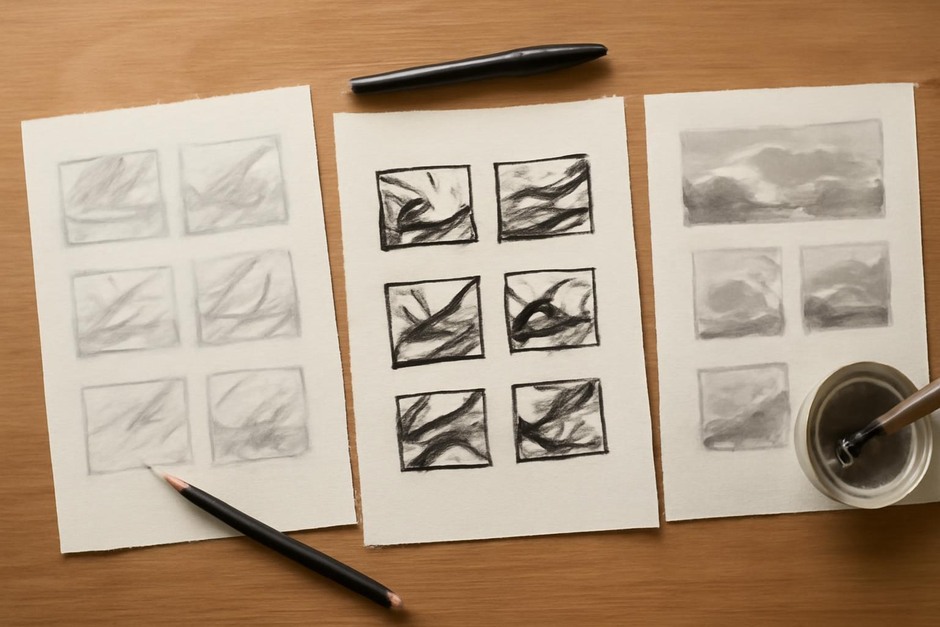
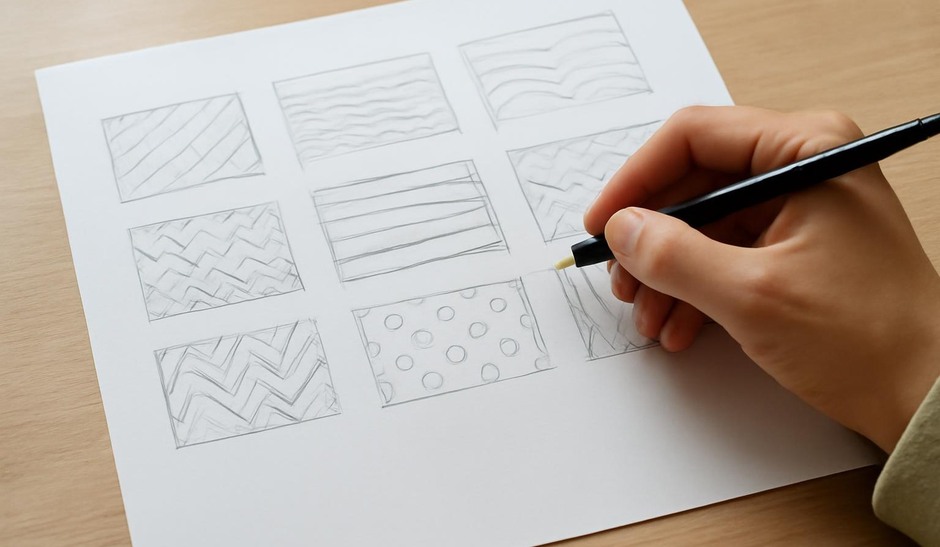
- Grid serials: Use a simple grid to place repeated elements. This builds steady, metrical rhythm and is useful for understanding spacing and countable beats.
- Progressive serials: Repeat a motif while changing its scale, value, or rotation. This generates a sense of tempo and development.
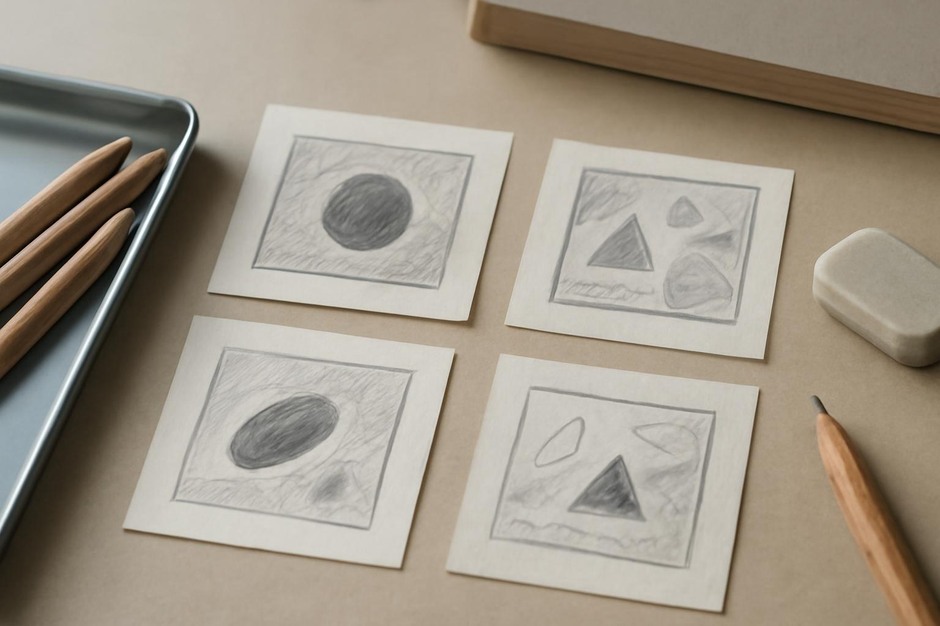
- Interruptive serials: Establish a repeated element, then interrupt it with a contrasting shape or void. This emphasizes pacing by contrast and surprise.
Exercises to practice pattern and pace
- Grid rhythm: Divide a small page into six rectangles. Place a single recurring shape in each, shifting position slightly. Note how small displacements alter rhythm.
- Scale progression: Draw a motif three times, each progressively larger or smaller. Observe where the eye rests and where it leaps.
- Interruption study: Make five repeated marks, then insert a visual anomaly in the third. Assess how the interruption changes perceived tempo.
Comparing outcomes
Grid serials tend to produce calm regularity; they are excellent for training consistent spacing and a disciplined sense of beat. Progressive serials read like a phrase that evolves; they encourage thinking in sequences and transitions. Interruptive serials teach how a single deviation can reset the rhythm and redirect attention.
Choose a method based on what you want to exercise. If you wish to test pacing, progressive serials are revealing. If you want to refine even spacing and interval perception, grids are straightforward and measurable. Interruptions are useful for learning how contrast and pacing interact.
Practical habit
Make a habit of a ten-minute serial routine once or twice a week. Keep the motifs simple so decisions focus on placement and tempo rather than execution. Over time, the repeated exposure to pattern will shift how you perceive beats in larger compositions and everyday arrangements of forms.
Repetition in thumbnailing is neither about copying nor about monotony; it is a concise way to make rhythm explicit and trainable. Exploring different serial strategies keeps practice varied and offers a clearer sense of how pattern and pace operate in visual terms.