Thumbnail Rhythms: Five-Minute Studies for Gesture and Flow
Why five minutes?
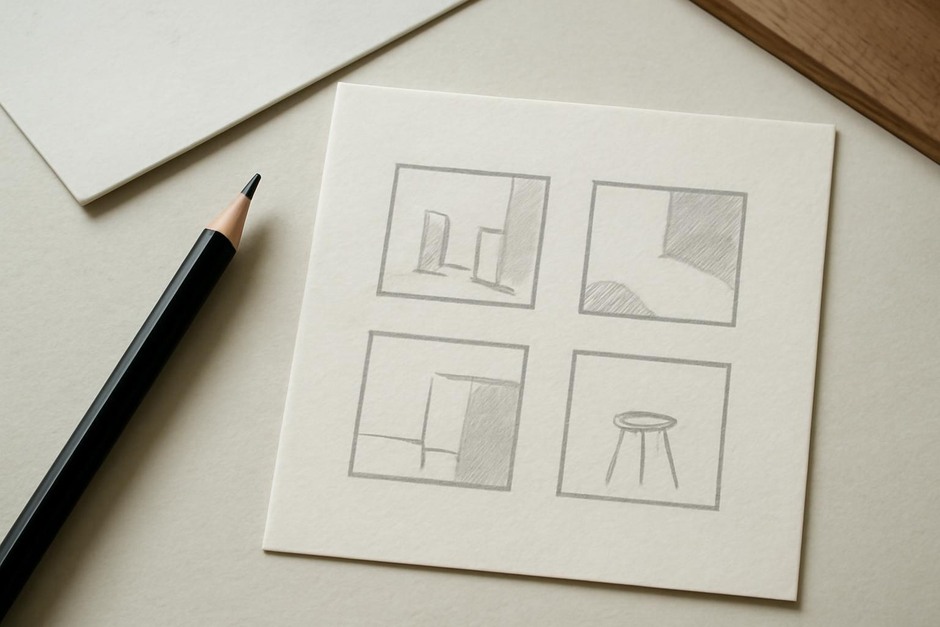
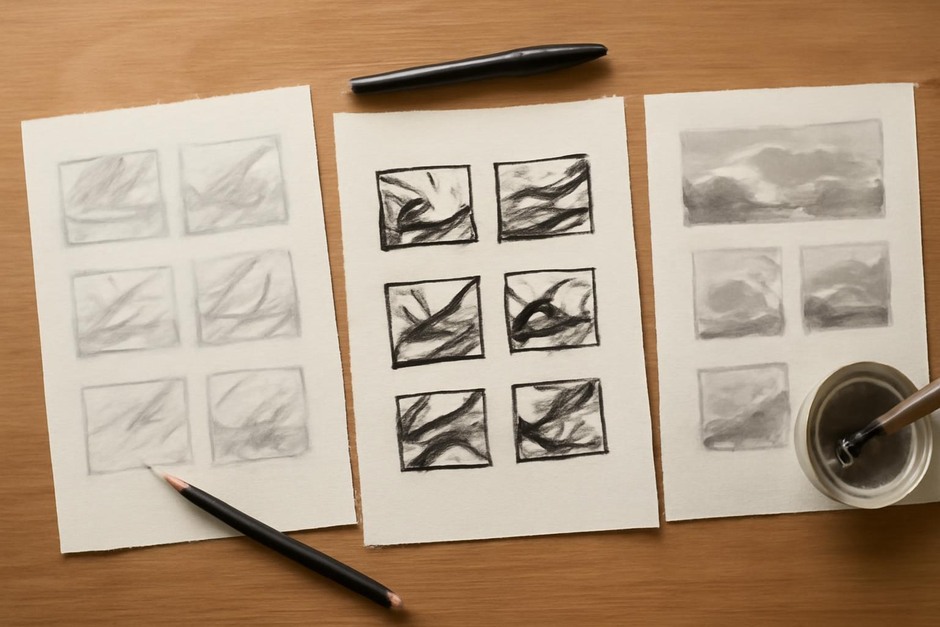
Five-minute thumbnails are small commitments that encourage bold decisions. The time limit reduces tendency to refine and instead privileges rhythm: the way marks move through a page, how shapes relate to one another, and how visual momentum is established. In the studio, these short sketches are useful for loosening control and noticing repeated tendencies in composition.
Two common approaches
Comparing methods helps reveal what aspect of rhythm you want to train. Here are two approaches often used in practice.
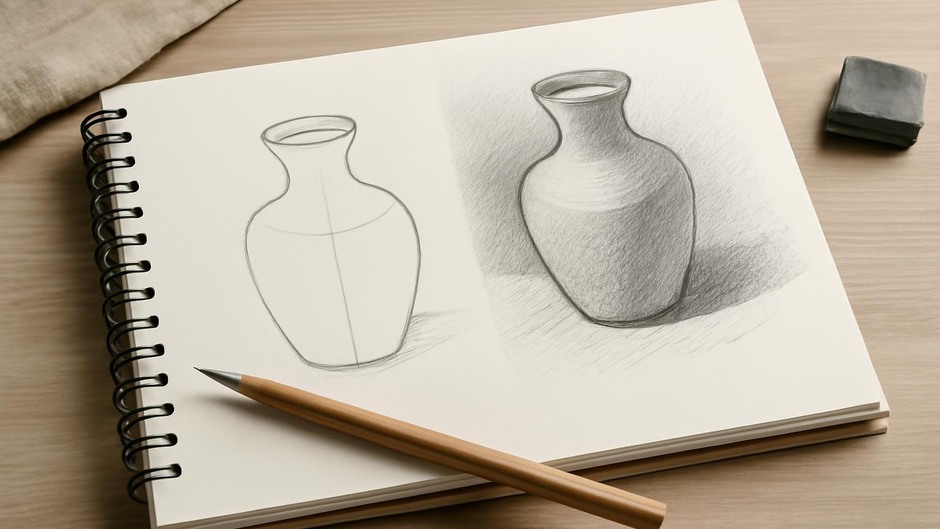
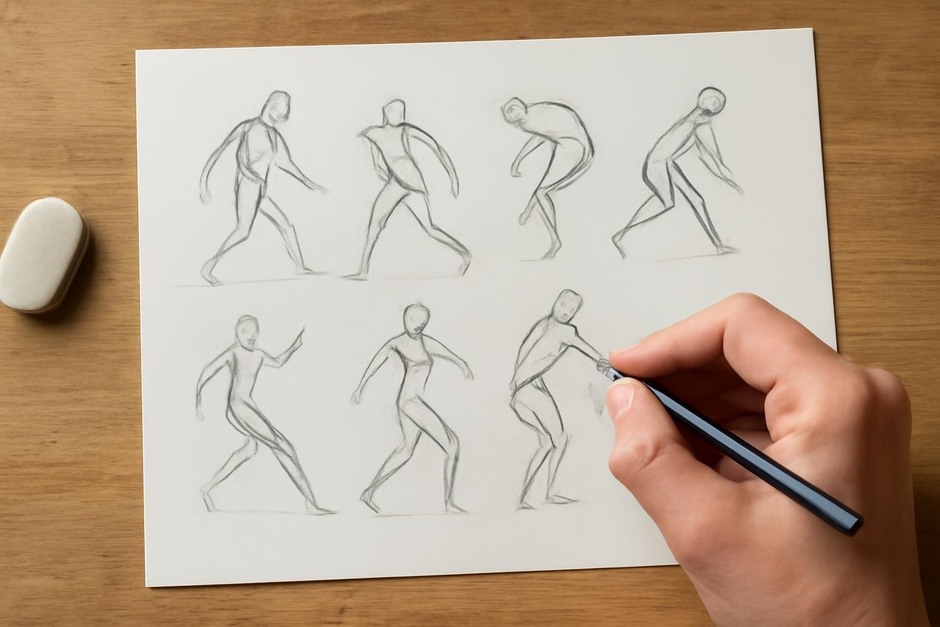
- Gesture-first: Start with quick, sweeping lines that indicate movement and main axes. The focus is on the implied motion through the composition—how diagonal, curve, or vertical lines create a directional pull. Pros: fast capture of energy. Cons: can underemphasize weight and shape relationships.
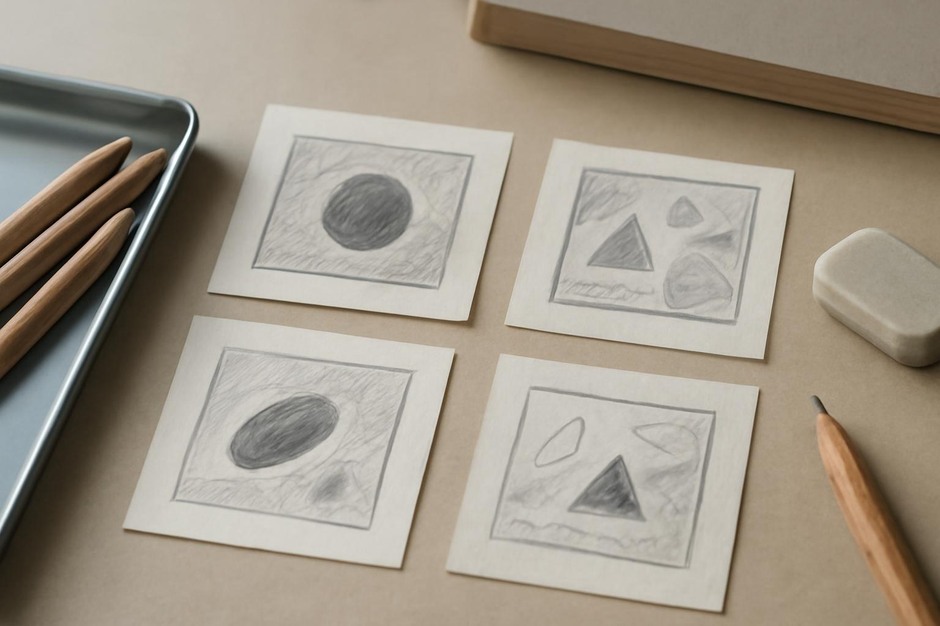
- Shape-first: Begin by blocking large shapes and masses, treating rhythm as the alternation and recurrence of these shapes. The focus is on visual tempo created by repeating forms and intervals. Pros: clearer mass distribution. Cons: may feel static if shapes are treated too mechanically.
Exercises to explore rhythm
Here are simple studio exercises that take five minutes each. The aim is consistent repetition more than the finished sketch.
- Single-move gesture: Choose a subject or memory. Make one continuous sweep that captures the main motion. No corrections; accept what the line yields.
- Alternating masses: Block two or three large shapes, then add a contrasting small shape to create a beat. Repeat with different proportions.
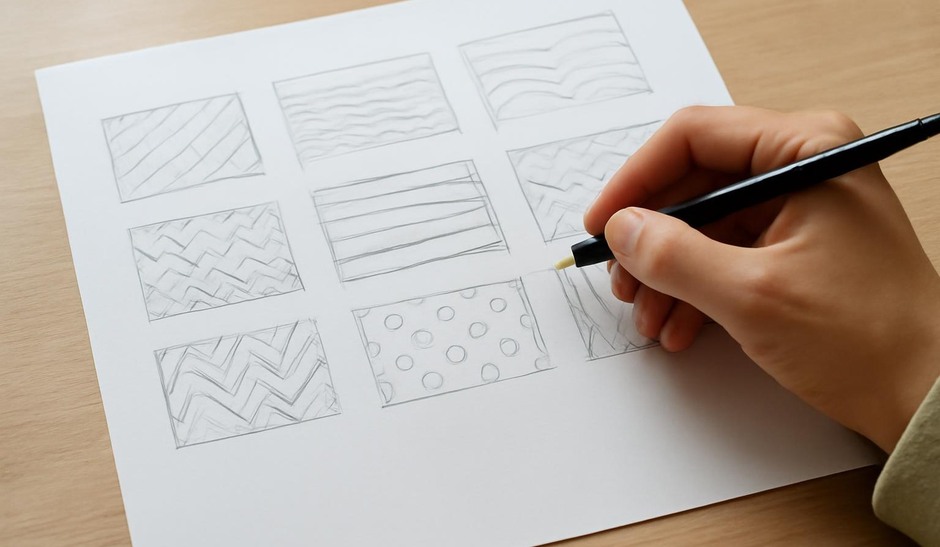
- Counterpoint lines: Draw one dominant line, then add two smaller lines that offset rhythmically. Focus on placement rather than detail.
Observations from comparison
Gesture-first sessions frequently produce lively, directional thumbnails that communicate motion clearly. They are helpful when the intention is to make a composition feel dynamic. Shape-first studies often clarify the compositional scaffolding; they reveal balance and pause points more readily. Neither is categorically better. The value is in seeing how each trains a different facet of rhythm: one trains movement, the other trains distribution and spacing.
Mixing both approaches in a single practice session can be revealing. Start with two gesture thumbnails to loosen up, then follow with two shape-blocking thumbnails to test how that looseness translates into mass relationships. Over weeks, this alternating routine can reveal preferences and gaps in perceptual habits.
Keeping track
Record the date and note one phrase after each set: “felt loose,” “weight heavy left,” “beat too regular.” These small remarks build a useful habit of observation that helps rhythm become a conscious tool rather than an accidental outcome.
In short, five-minute thumbnails are an exercise in tempo. By comparing gesture-first and shape-first methods and cycling between them, you develop a more attentive sense of how marks create visual flow. The practice is small, repeatable, and cumulative—qualities that make it suitable for everyday studio work.